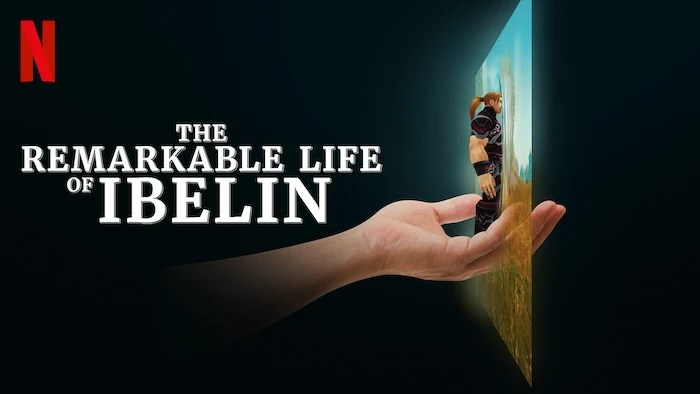
How much do we know about the people in our lives? How many times do we come to conclusions about something without seeking out the actual answer? The Remarkable Life of Ibelin, a documentary released on Netflix last month, gives us a glimpse into the life of a young man with a terminal illness, and how impactful online communities can be.
First the stats. The Remarkable Life of Ibelin is a 2024 Norwegian documentary by director Benjamin Ree that chronicles the life of Mats Steen. Mats was born with Duchenne muscular dystrophy, which slowly deteriorates the muscles: Mats lived until age 25 and at the end only could move his fingers. All of this is known within the first few minutes of the film so no spoilers here. But the film is not about sadness and loss: it is about love, friendship, connections, and finding one’s self. And that there always is more to the story.
Production value:
First though, let me just rave about how remarkable the production of the film is. This is not just any documentary. Ree does a masterful job of capturing Mats’ real world and online life by flawlessly combining home video footage, interviews, and animation of the online gaming scenes. Nothing is made up. Ree pulls from over 48000 pages of World of Warcraft transcripts to recreate moving and poignant moments in the game, using perfectly crafted animation to reflect what the characters looked like and did in those moments. As another article put it, you feel like watching the Wizard the Oz as Dorothy jumps between her real life in black and white and the glorious color of Oz. Yet there are no gaps as we jump back and forth between the two worlds because we know both are Mats life. The only other time I saw animation this captivating in a documentary was PBS’s Independent Lens episode “Tower” which depicted the 1966 University of Texas Tower shooting. I truly cannot imagine Mats Steen’s life portrayed in any other way then the way it was cultivated in every second of this documentary.
Spoilers below….
Unraveling the Layers of A Life:
Ok, so besides how grandeur the production is, why did I post that this is a must watch before I even finished watching it myself? Why is this on my list with Touching the Void for documentaries everyone should see?
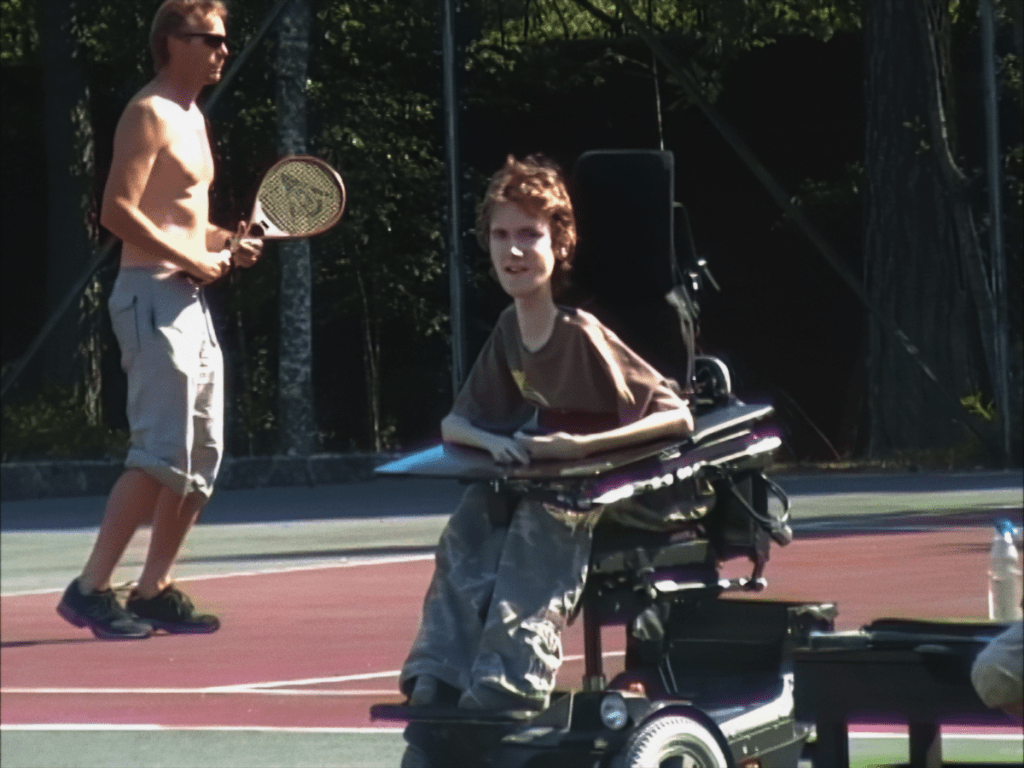
In real life, we see home video of Mats slowly losing his ability to walk and play, having to use a wheelchair for most of his life. His parents only saw him withdrawing, playing online more and more. Once he graduated from school, he felt like he had no where else to go, nothing to do. We see pictures of him on the fringes of school photos, having no real relationships as peers could do activities he couldn’t do. One of the worse parts for me was when we see him sitting in his chair, watching others play tennis, moving his head back and forth. We see that clip multiple times and all I can think about is, did he actually want to be there or was that just what his parents wanted him to do in order to be outside? How annoying it had to be to just sit there and watch – why not do something where he was involved. It was heartbreaking to think about. Yet that was not his life.
You must watch the documentary to truly understand this next part: Mats had his own blog where he chronicled a lot of his life and emotions. After Mats died, he left the password for his parents and sister to access the blog and his whole platform. It was only then that his family saw the whole other life Mats had. As they read the blog, they posted one more post to let people know Mats had died. They had no idea of the dozens and dozens of emails they received from people all over the world, who had developed strong bonds with Mats in the gaming community.
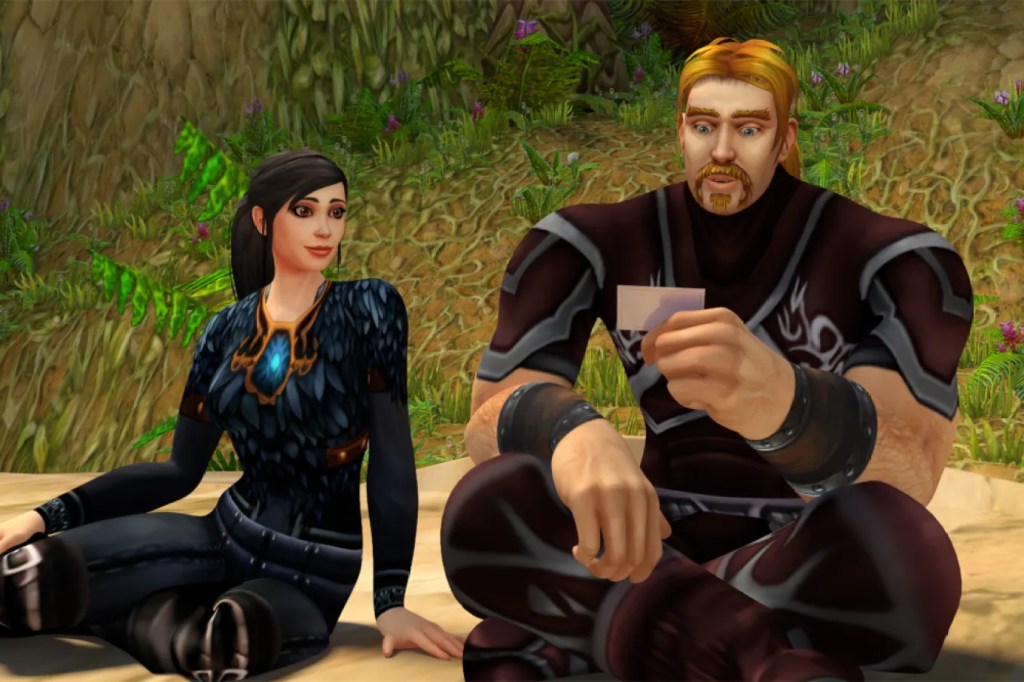
As a parent in 2024, we all need the message on how important online gaming can be on someone’s life, and how impactful and real the relationships can be. I never played World of Warcraft, but I had small doses of other role-playing games like Fortnite and know how good they could be if someone can actually play them (not me!). I also know how much my son interacts with people online. Some are “IRL” friends, others he only knows online, but all are people he knows with different degrees of friendship. And he has specific groups he interacts with for specific games. My son prefers audio or FaceTime when playing in real time with people. Mats used messaging. Yet both are ways to communicate- and luckily for the rest of us, all of Mats’ comments were archived in the game. Thanks to those transcripts and emails from fellow gamers, we see how far reaching his friends were, we see romantic interests, fighting and making up. Mats character was this tall, strong, intelligent, investigator who was also soft and caring. Time after time we see how everyone in his circle (guild) came to him for help or to talk to. He was an anchor in that group of gamers that played together for years. We see him develop a relationship but ruin it out of fear – like many people do.
[major spoiler alert: skip to next paragraph if you haven’t watched yet] One of the most powerful moments – through both animation in the game and interviews – was how Mats was able to bring a mom and her autistic son together through the game. Because of Mats, the mom and son were able to communicate in the game even when in the sane house, which slowly led to communication in real life. Same for hugging – hugging the mom in the game led to hugging in real life. And it also let the son have the courage to be more open to others in real life too and go back to school. Who knows what would have happened if the mom hadn’t opened up to Mats about her son in the game.
I totally can relate to Mats not opening up to his online friends about his real life issues. It was only with the blog and eventually towards the end that some learned of his condition. I won’t give away one of the hardest parts in the story, but it had to be so hard for Mats to not go to an in-person gathering and not tell people why for so long. He had this “character” online and I get the fear in showing any vulnerability about who he was outside of the game. I think after he did open up to some, he understood how real the relationships were – I just don’t think he fully understood the impact his own caring, compassion, and support had on so many over the years. And that’s why as much as we worry about predators or bullying or kids being isolated in their room in front of a screen, we also have to understand the positive impact and real connections online gaming can have in people’s lives. Not to mention the additional value such platforms can have on those who have limited communication or interactions in the real world for whatever reason. I may not have relationships with people when gaming (except my son) but I have built deep friendships with people through other online platforms who I never have met in real life – many who I never even seen on zoom – but have been a part of their lives for 20 years now. So I get it. And as a side note – when I say I don’t have relationships when gaming except for my son, that is critical for any parent. Instead of scuffing at the game your kid is playing, log on and play it yourself so you at least know what is going on. Stay aware. I am absolutely horrible at Fortnite, Brawl Stars, Valorant and any Roblox game that involves jumping, but I have my own accounts and I know what they are about and what requests for battle passes or skins or fashion mean. And hey, if I could survive more than one level I totally would be playing them too. But I am content with my NYTimes puzzle games and on/off addiction with Candy Crush and Mahjung.
In closing – I know I said a lot but I also left out a lot too because I don’t want those reading this just to know the story of Mats Steen. I want you to watch the documentary- end to end – because it’s worth every minute of seeing strength and empathy and compassion in midst of coping with a body that was failing such a strong and insightful young man.
Here’s to you Lord Ibelin Redmoore.

